


What to Expect on the Bighorn at 1,500 cfs
Updated: Jul 23
By Anne Marie Emery

While lower water changes how the river fishes and how anglers experience it, it also creates new opportunities and challenges. As BHRA works to better understand the ecological effects of this year's low-flow conditions, we also want to help anglers prepare for what they'll encounter on the water. To do that, we've combined insights from BHRA's ongoing scientific monitoring with the firsthand observations of seasoned Bighorn River guides who have successfully fished through previous low-water years. Together, these perspectives offer a practical look at what anglers can expect—and how to make the most of the Bighorn during a season of 1,500 cfs flows.
THE RIVER WILL FEEL SMALLER—BECAUSE IT IS
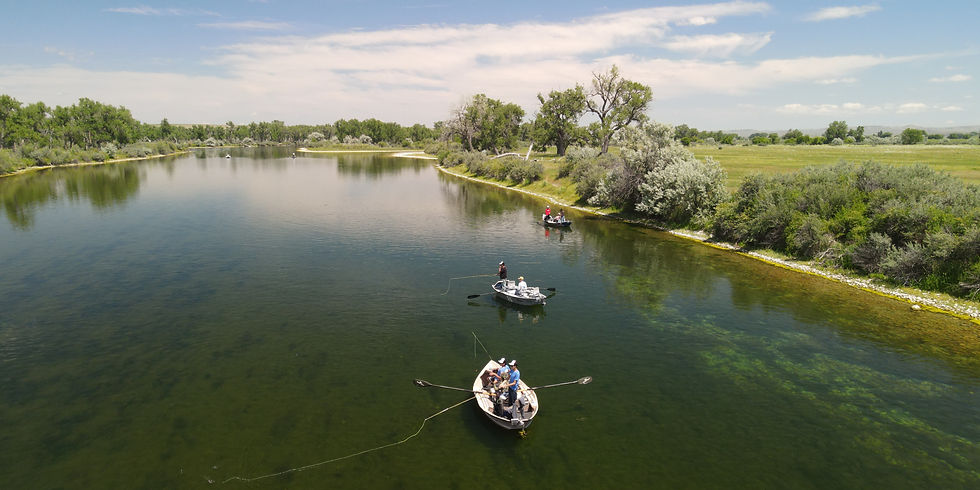
At 1,500 cfs, the Bighorn occupies less of its floodplain. Many side-channels that provide excellent habitat during higher flows (or even slightly higher flows) will become disconnected or dewatered, concentrating both water and fish into the main river channel. The result is a river that feels narrower and more intimate than many anglers are accustomed to, requiring extra communication, especially between boats and wade anglers.
WADING OPPORTUNITIES WILL INCREASE
Lower flows expose gravel bars and reduce water depth across many riffles and runs, making much more of the river accessible to walk-wade anglers. Areas that typically require a boat to fish may now be accessible by foot. As a result, anglers floating the river should expect to encounter more people fishing from the bank, in side-channels and around river bends. Give wade anglers plenty of space, slow down when approaching fishing water, and communicate your intentions early to avoid disrupting their experience. Likewise, wade anglers should remain aware of approaching boats and work together to safely share the river. As always, wade carefully, be mindful of private property boundaries (staying below high-water mark) and remember that a little patience and courtesy go a long way toward making the river enjoyable for everyone.

EXPECT MORE ANGLERS ON THE WATER
The Bighorn is a heavily used river and during low flows it will be smaller. As neighboring free-stone rivers experience temperature-related fishing restrictions and the river becomes more accessible to walk-wade anglers, anticipate crowds. Boat ramps, parking areas and popular fishing runs will become busier than usual, especially as the summer progresses. In response, this rise in angler numbers will make the fishing periodically "hit or miss" as trout become accustomed to being caught and spend more time resting/dodging anglers. As with most days on the water, some days you will have success and some days it will be a little tougher. Acceptance of this fact, along with courtesy, patience, and a willingness to remain communicative with other users of the river, will help manage personal expectations and help ensure a good experience. Click here for more tips on Bighorn River Etiquette, from legendary Bighorn angler Phil Gonzalez.

USE EXTRA CAUTION AT BOAT RAMPS
Lower water levels have left many boat ramps partially exposed at their lower ends, creating a sharper drop-off where the concrete meets the riverbed. When launching or retrieving your boat, use extra caution and avoid backing farther than necessary. After loading your boat, pull forward slowly and carefully to avoid damaging your trailer or tow vehicle. Taking a few extra moments at the ramp can help prevent an expensive repair and keep the launch moving smoothly for everyone. If you notice a damaged or hazardous boat ramp, please let us know so we can share the information with the appropriate managing agency and other anglers.

EXPECT AQUATIC VEGETATION
Warm temperatures, abundant sunlight, and slower water create ideal conditions for aquatic vegetation to flourish. While this is a normal characteristic of the Bighorn River, low flows tend to amplify its extent and visibility. Although weeds and filamentous algae can be unsightly at times - especially in disconnected side channels - and frustrating for anglers swinging streamers, nymphing, or drifting dry flies, it's worth remembering the important ecological role they play. Aquatic vegetation helps absorb nutrients entering the river from the reservoir, stabilizes sediments delivered by tributaries and irrigation return flows, produces oxygen during daylight hours, and provides valuable habitat for aquatic insects and juvenile fish. In many ways, these plants are an important part of what makes the Bighorn such a productive trout fishery. And yes...be prepared to dust off the "Bighorn Slap" as clearing weeds from your line will likely become a familiar part of the day's rhythm!
WATER CLARITY CHANGES DOWNSTREAM
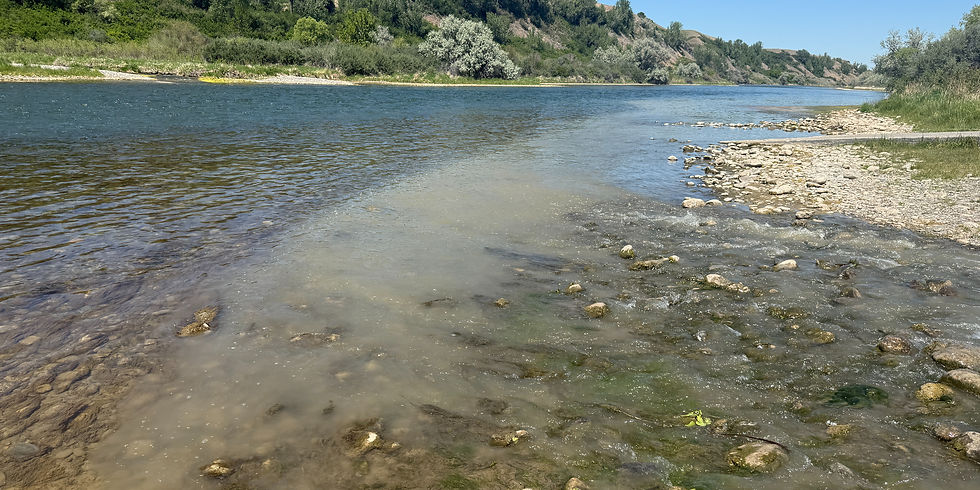
The upper river below Afterbay Dam will likely remain exceptionally clear throughout much of the summer. As you progress downstream, however, the influence of tributaries, irrigation return flows, and prairie drainages becomes increasingly apparent, often resulting in more turbid water. This is a normal characteristic of the Bighorn River, but it becomes more noticeable during periods of low flow and following localized rain events. Don't let slightly stained water discourage you. Reduced water clarity can actually benefit anglers by making trout feel more secure and less wary, often allowing fish to feed more confidently and making them less selective than those in the crystal-clear waters of the upper river.
DRY FLY-FISHING MAY BE DELAYED & IMPROVE DOWNSTREAM
The combination of cold-water releases from Yellowtail Dam and the absence of a strong spring flushing flow will likely affect the timing and density of Bighorn hatches this year, particularly in the upper section where sowbugs and scuds dominate. As the river gradually warms and progresses downstream, insect emergence is expected to become more consistent, making the lower reaches of the Bighorn a likely destination for some of the season's best dry fly fishing during a low-water year. Current reports from the lower river indicate PMDs and Black Caddis are starting to hatch.
KEEP AN EYE ON WATER TEMPERATURES

Current conditions and temperature data from previous low years suggest water temperatures should remain suitable for trout throughout the season - one of the benefits of the Bighorn being a tailwater fishery and having a deep reservoir. However, the BHRA funded temperature probe installed at the St. Xavier Bridge is showing afternoon temperatures starting to approach 62°F, indicating that we should fish with care, especially on lower reaches of the river. As summer progresses, we encourage anglers to refer to the chart (right) provided by our friends at TU while also frequenting real-time river temperatures made available and updated by the BHRA on the BHRA River Dashboard.
PRACTICE RESPONSIBLE CATCH & RELEASE
Even when water temperatures remain suitable for trout, fish experience greater stress during the warm summer months and when subjected to repeated angling pressure. This makes proper fish handling more important than ever. Land fish quickly by using appropriately heavy tippet, pinch down your barbs to speed hook removal, keep fish in the water whenever possible, and minimize air exposure if a quick photo is taken. These simple practices along with these tips from BHRA board chair John Sindland can significantly improve a trout's chances of survival after release. Remember: A wet fish is a healthy fish.
EXPECT PLENTY OF BIG, HEALTHY TROUT (REALLY)
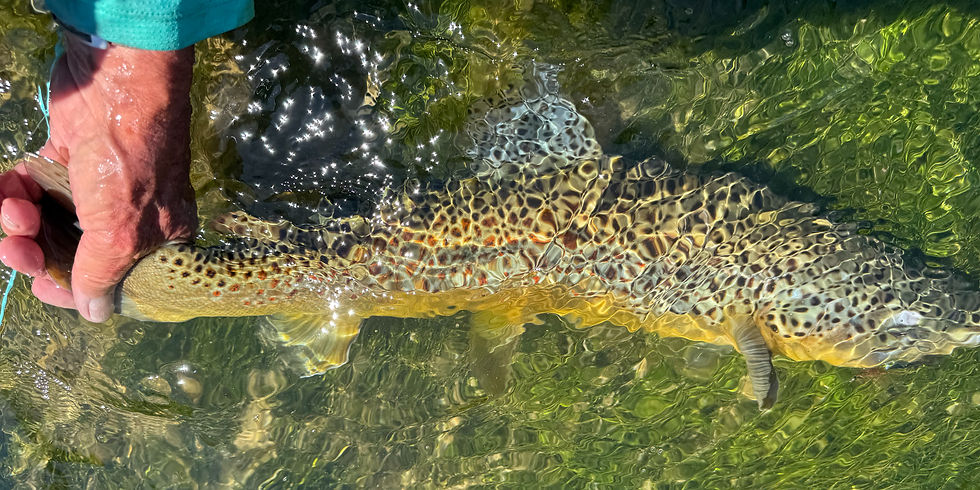
The good news is that lower flows do not necessarily mean fewer fish, particularly when they are not part of a prolonged multi-year drought. Anglers on the upper 13 miles are commonly reporting trout in the 17- to 21-inch range, while reports from the lower river include fish ranging from 14 inches to an impressive 25 inches. Recent monitoring indicates the Bighorn continues to support abundant trout populations in excellent condition. However, low flows concentrate trout into smaller areas, making them more vulnerable to repeated angling pressure. This may be a year when individual anglers can have a greater impact on the fishery than they realize. Consider limiting "row-arounds" on actively feeding fish, rotating to new water after landing a few trout, and practicing thoughtful catch-and-release techniques. Using appropriately heavy tippet, landing fish quickly, keeping them in the water, and minimizing handling all help reduce stress and ensure these exceptional trout remain healthy throughout the season.
CONCLUSION
While 1,500 cfs may look unfamiliar to many anglers, the Bighorn River has endured -and recovered from - similar conditions before. Healthy trout populations, cool releases from Yellowtail Dam, and thoughtful stewardship by anglers will all play an important role in helping the fishery continue to thrive. By adapting our expectations and fishing responsibly, we can ensure the Bighorn remains one of the West's premier trout rivers, even during a low-water year. If you would like to help expand BHRA's monitoring program or just support the organization in its work to keep you informed, please consider exploring the many Ways to Give back to the Bighorn.
Acknowledgment: sincere appreciation to the following Bighorn River guides for generously sharing their time, experience, and observations to help inform this article: Jeremy Gilbertson, Jeremy DeVries, Chad Pavlick, Ethan Green, Matt Clawson, John Sindland, Dell Despain, Pete Shanafelt, Phil Chamberlain, Carter Klatt, Mike Kelly, Tyrell Blake, and Brandon Booty.
Additional Resources & Links
Yellowtail Dam Water Supply and Projected Operations for July - Released each month by the Montana Area Office of the Bureau of Reclamation and posted on the BHRA website, these plans incorporate current basin conditions and forecasted inflows to guide reservoir operations, projected lake levels, and Bighorn River flows under minimum, average, and maximum water supply scenarios.
Montana Rivers Under Fishing Restrictions - keep abreast of state closures and hoot-owl restrictions throughout the summer.



Whoever does your writing is top tier. Been looking for an honest outlook and this is great.